calculator answers stay on this device

dope math

doing science via doing drugs

the dope census

we speak our own language.

Drugs have their own subculture and their own language. We’re collecting slang terms: for the drugs themselves, for the units they’re sold in, and more. Urban Dictionary meets Erowid.

add drug lingo →
showing: opioid slang
  • Drug slang by city, from the Dope Census so far. Words for the product or the unit it’s sold in:
  • down, Vancouver, BC
  • ball, Portland
  • three pack, Los Angeles
  • jab, Chicago
  • down, Philadelphia and Boston
  • dog food, New York City
  • Portland (Maine), Toronto, Nashville, Atlanta, Miami, Houston, Denver, Phoenix, Puerto Rico: not known yet. Add yours.
tiny fentanyl calculator

how much fentanyl do you do a day, in milligrams?

Not the cut, but the actual drug. There is an answer! Just like someone who takes OxyContin can tell you the milligrams they use, once you figure out how much is cut vs. drug, you can figure out how much you use. Once you know that, you can compare it to other opioids and dosages to see where you sit.

It’s a rough estimate, not a dose. Nothing you type into the calculator is saved or sent.

The Dope Census is anonymous. No names, no IP addresses, nothing that points to a person. Any city you know counts, even one you just passed through.

The calculator keeps nothing. What you type stays on your device.

step 1 · your region

Where are you, roughly?

Just the broad region — we don't ask your city or track anything. It only sets the average purity we start from, since that runs so different across the map.

step 2 · how you buy

How do you buy it?

Why this question matters: a "bag" in one city can mean something totally different somewhere else. Some places talk in points, niftys, grams, bundles, or stamp bags, and some do not call it dope at all.

step 3 · the quality

How good is it?

Compare it with the usual supply in the broad region you selected. The 7/10 marker is where this tool uses that region's starting assumption.

7/10
run-of-the-mill
← much weakermuch stronger →
7 · matches this region's average
%

Estimated purity used in the calculation. The slider sets it from the regional baseline; edit it if you have a better aggregate assumption.
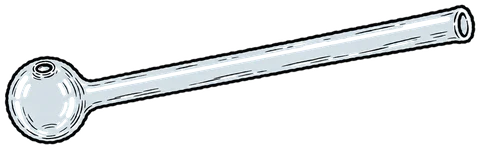
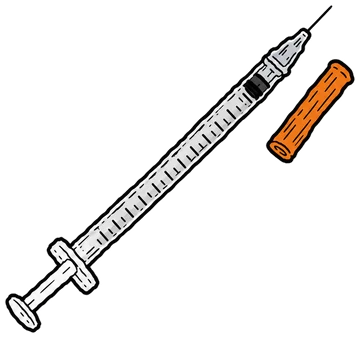
route of administration: not calculated

Lots of uncertainty. How you use changes how much of it you absorb, and those numbers are hard to pin down, so dope math skips that choice here.

your estimate

here’s your dope math

Illustrative random scenario — not a tested physical sample and not your information.
estimated fentanyl content · fixed logarithmic scale · not a danger score

—mg
of actual fentanyl a day

how does that much fentanyl compare to other opioids?

— mgof fentanyl a day
≈
— mgof morphine a day, if taken by mouth
— mgof morphine a day
≈
— pills60-milligram morphine pills a day

a strength comparison, not a dose.
the numbers used to get this estimate
Purity source: rough regional averages from aggregate drug checking research in Los Angeles, BC, and Toronto. This is not a reading of any specific supply.
Go slow
Especially after any time off. Do a tester. Wait.
Not alone
Use with someone, or Never Use Alone: 800-484-3731.
Naloxone
Keep narcan close; make sure people know where it is.
Check it
You can't see strength. Get it checked if you can.

who made this

I built this tool because putting a scale on my own habit helped me talk more clearly about what I was experiencing. It made me feel infinitely better about being on 180 milligrams of methadone.

I figured if it helped me, it might help someone else.

contact

A project inbox is coming soon for corrections, source notes, and city-specific dope math. For now, the optional dictionary form is the best way to send local unit names, weights, prices, or slang.

the video + the research

The calculator adapts the central idea from published Los Angeles research. It is a simpler comparison tool, not a lab test or a measurement of what your body absorbs.

What does this measure?
Read the transcript
What does this measure? Dope Math estimates how many milligrams of actual fentanyl are in the powder you use each day. That's the number it puts first. If you take a prescription, you know how many milligrams you're on. People who use fentanyl should be able to know that too. It can help with medication for opioid use disorder, but that's not the only reason to know. The idea comes from researchers in Los Angeles, published in Drug and Alcohol Dependence and covered in The New York Times. They combined five hundred and nine drug-checking samples with detailed reports from forty-seven people who use, then ran a model with two million simulated draws to account for uncertainty. Those Los Angeles samples averaged about twelve and a half percent fentanyl and fluorofentanyl, but purity varied a lot. Dope Math is a simpler version of that idea. You pick a broad region, say how much you use, and whether it's weaker or stronger than the norm in your area. It turns that into milligrams of powder a day, then shows how much of that powder is likely fentanyl and how much is cut, with a wide range, because purity swings a lot. Then it compares that fentanyl to morphine. It uses the low end of the CDC's estimate, that fentanyl is fifty times stronger than morphine, and shows the same amount as sixty-milligram morphine pills. The starting purity numbers come from drug-checking research and public reports in Los Angeles, British Columbia, and Toronto. The value for the rest of the U.S. is a rough assumption. These averages change over time, and none of them can tell you what's in a specific bag. This number doesn't account for how you use, how much is absorbed, your tolerance, or what's safe. Milligrams of fentanyl per day. This was never unknowable. We just weren't given the numbers to do the math.